
Three-Day Training for Sarpanches and Officials Begins July 8; Seethakka Calls for Transparent, Rule-Based Rural Governance
THE JOURNALIST POST NEWS DESK
HYDERABAD | July 7, 2026
Telangana Minister for Panchayat Raj, Rural Development and Women & Child Welfare Dansari Anasuya on Tuesday reaffirmed the State Government’s commitment to strengthening Gram Panchayats, stating that vibrant and self-reliant village institutions are essential for achieving the vision of Gram Swaraj and accelerating rural development. She stressed that every development programme undertaken at the village level must reflect the needs of the people while strictly adhering to government rules and financial regulations, adding that not a single rupee of public money should be spent in violation of prescribed guidelines.
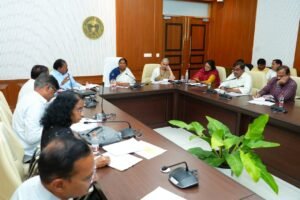
The Minister made these remarks while chairing a video conference with Additional Collectors (Local Bodies), Engineers-in-Chief, Chief Executive Officers, District Rural Development Officers, District Panchayat Officers, Executive Engineers of the Panchayat Raj and Rural Water Supply departments, and other senior officials. The meeting reviewed the implementation of the Gram Panchayat Comprehensive Development Plan (GP SAP), utilisation of 16th Finance Commission grants, implementation of the VBG-RAM-G Act, employment guarantee works, drinking water supply, sanitation, and rural infrastructure development across Telangana.
Announcing a major capacity-building initiative, Seethakka said the State Government will organise a comprehensive three-day training programme from July 8 to July 10 for Sarpanches, Upa-Sarpanches, Panchayat Secretaries, engineers and other field-level officials across all districts. She said the objective of the programme is to equip grassroots functionaries with complete knowledge of new government policies, financial norms and administrative procedures so that village development activities are implemented efficiently and transparently. She noted that State-level training for Master Resource Persons has already been completed and directed district authorities to conduct the programmes with the same quality and standards.
The Minister instructed officials to ensure that participants gain a clear understanding of the preparation of Gram Panchayat Comprehensive Development Plans (GP SAP), inter-departmental coordination, prioritisation of village needs, proper utilisation of 16th Finance Commission funds, implementation procedures under the VBG-RAM-G scheme, work selection, financial management and statutory administrative processes. She said strengthening institutional capacity at the village level would significantly improve governance and ensure better delivery of public services.
Highlighting the government’s commitment to rural employment, Seethakka announced that ₹6,311 crore has been approved under the VBG-RAM-G programme for the current financial year. She said the government has set a target of generating 12 crore person-days of employment between July and March next year and instructed officials to prepare action plans to create at least 1,000 person-days of work every month in every Gram Panchayat. She also directed authorities to work towards providing employment to nearly five lakh labourers every day across the State through effective implementation of the programme.
Keeping in view the possible impact of El Niño, the Minister instructed officials to accord the highest priority to water conservation works in rural areas. She directed departments to establish Magic Soak Pits for every household, farm ponds for agricultural fields, percolation tanks in every village, and at least one borewell recharge structure in each Gram Panchayat. She also instructed officials to prepare an action plan for constructing 1,000 new agricultural wells across Telangana to strengthen groundwater resources and improve irrigation facilities.
Seethakka further directed officials to prepare comprehensive plans for achieving saturation in drinking water supply, sanitation, internal roads, drainage systems, greenery, public infrastructure and employment generation in villages. She instructed departments to complete all pending Gram Panchayat buildings, Women’s Centres and Anganwadi Centres within the stipulated deadlines to improve rural infrastructure.
The Minister emphasised that grants received under the 16th Finance Commission must be utilised strictly in accordance with Central Government guidelines and approved annual action plans. She called for complete transparency in every financial transaction to eliminate any possibility of misuse or violation of rules.
Expressing concern over public health during the monsoon season, Seethakka directed officials to ensure uninterrupted drinking water supply and intensify sanitation drives to prevent seasonal diseases. She also instructed District Panchayat Officers to complete works under the Solid Waste Management (SWM Rules–2026) within the prescribed timeline and strengthen stray dog control through sterilisation programmes and the establishment of Animal Birth Control (ABC) Centres.
Stressing the need for financial sustainability, the Minister urged officials to focus on increasing the Own Source Revenue (OSR) of Gram Panchayats by preparing effective action plans that would enable local bodies to generate higher revenues and become more self-reliant.
Making attendance compulsory, Seethakka warned that Sarpanches, Upa-Sarpanches, Panchayat Secretaries, engineering officials and concerned Mandal and district-level officers must participate in the three-day training programme without fail. She cautioned that departmental action would be initiated against those absent due to negligence and urged all participants to treat the training as a significant opportunity to shape the future of village development rather than as a routine official exercise.
The meeting was attended by Special Chief Secretary Dana Kishore, Commissioner Divya Devarajan, Special Commissioner Srilakshmi, Engineers-in-Chief, Additional Collectors (Local Bodies), Chief Executive Officers, District Rural Development Officers, District Panchayat Officers and Executive Engineers from the Panchayat Raj and Rural Water Supply departments.